Connoisseurship Traps
A parable about taste

You wake up on a gorgeous beach. Crystalline water laps at your toes. Fresh tropical aromas from flowering halophytes waft by in the gentle breeze. You are delighted by the dance of the pipers and the periwinkles. No matter where you focus, you are bathed in immediate sensory pleasures. You could lie here forever, you think.
Eventually, after many hours but far less than forever, you start to get thirsty. You realize the salt water won’t help. Your stomach growls. Your skin is starting to burn in the now-overbearing warmth of the golden sun. Nothing has changed about the paradise around you, but it is not providing you with what you need any longer. It is an incomplete environment for the type of thing that you are. Oh to be a periwinkle!
You finally look behind you, away from the hypnotic ocean waves, and see scrubby dunes gradually giving way to a coastal forest of live oaks and palms. A figure stands at the tree line, beckoning you. “Climb! Climb!” he shouts.
It hurts, it’s difficult, it requires abandoning your sandpipers and seafoam, but you manage to climb the dunes and enter the soothing shade of the forest. The figure tips a canteen of water to your mouth and you drink greedily, then ask where you can get more.
“Follow me. I’ll show you,” your guide says. “But you’ll have to climb.”
The forest is not as immediately delightful, but it has its pleasures too, you come to realize. There are more varied textures to touch than just the powdery sand - soft moss, rough bark, crinkly dead leaves and supple live ones. The dappled sunlight filtering through the treetops is even prettier than what you now recognize as the harsh exposure of the beach. More fragrant flowers can grow here, and cuter creatures scamper through the undergrowth.
And best of all, there is water. Your guide leads you to a small clear brook running down from a hillside, and you can finally slake your thirst. Yes, you think, it hurt to climb those dunes but it’s a very good thing you did. The world is wider than just the beach and that’s beautiful.
Your guide pulls an orange off a tree and hands it to you to eat. It is tasty, but not very filling. You manage to locate a couple more oranges, but there isn’t much else around that looks appetizing. Your guide has opened his pack and pulled out a bundle of dried meat. You eat some eagerly, and ask where you can get more.
“Follow me. I’ll show you,” your guide says. “But you’ll have to climb.”
Your legs burn as you follow the brook up the hillside. More types of trees and flowers and scampering creatures appear as you venture further inland, but in your exhaustion you barely notice them. Maybe you should have stayed near the beach after all, maybe you could have survived on oranges alone.
Finally, you reach the crest of the hill and see a small village stretching out before you, nestled into a gentle valley below a towering fog-shrouded mountain. The sun is setting now, and the smell of fresh-baked bread and roasting mutton make your mouth water as you stumble towards the quaint wooden houses. In the distance, beyond the wheat fields, sheep graze on emerald pastures speckled with apple trees. The brook you were following turns a milling wheel as it flows through the valley.
A bed at the inn is waiting for you, with a mug of ale served alongside your dinner. You are sated at last - it was hard to get to and required much labor from the residents, but the fruits of this valley satisfy you in a way that the flashy pleasures of the beach never could have. You sleep deeply.
In gratitude, and to earn your keep, you do a few days’ labor around the village, learning how the sheets are woven, the lambs butchered, the grains harvested. You could live here forever, you think. And this time you are not proven wrong.
You move into an empty cottage in the village. You take up a trade. You even volunteer to return to the beach - it turns out that people are always washing up there, and always need guides to spur them up the dunes, lest they succumb to exposure and be eaten by crabs. It’s a nice treat returning to the beach occasionally, now that you know you don’t have to stay there forever.
After guiding your third such soul up the hill and sending her off to bed at the inn, you remain in the pub for the evening. “Why doesn’t the village get too crowded, if people are always washing up on the beach?” you ask the publican. “Why was there an empty cottage for me to move into?”
“Oh, many folks don’t want to stay here long,” the bartender replies. “They want to go to the city. We’re just a rest stop for them.”
“What’s in the city?” you ask.
“Oh, all sorts of things. They’ve different crops, different livestock, different trees. But marvelous inventions too. All the cleverest folk travel to the city.”
This sounds wonderful to you. The forest was better than the beach, and the village better than the forest. Surely the city is better still! “How do I get there?” you ask.
Someone taps you on the shoulder.
“Follow me. I’ll show you,” your guide says. “But you’ll have to climb.”
This climb is much more arduous than all the previous ones put together. But you have grown stronger traversing the hillside and now almost relish the challenge. Your guide leads you on, indefatigable, above the rim of the valley and over the rugged foothills of the great mountain North of town.
After many hours hiking on steep and rocky trails, your trembling legs about to give out on you, you crest one of the hills and see The City glittering before you. Terraced rice paddies and aquaculture ponds tile the hillside, sweeping down to feed an orderly grid of ornate courtyard blocks surrounding alabaster towers. Even from afar you can sense the hum of industry, see the bustle of horse-drawn carriages, hear echoing snatches of the music and debate and poetry of the city folk. Despite the slight chill in the air, you feel the vitality that animates The City warming your soul.
You spend weeks exploring, trying new foods, seeing new sights, visiting galleries and operas and botanical gardens and zoological parks. How foolish you were to think you could live in the village forever - and miss out on all this? One day your guide takes you to the tallest building in town, a ‘sky-scraper’ that the cleverest engineers in the city limned with tempered steel to allow it to stand many scores of feet above the ground.
From here, through a spyglass, you can see more of the world than you have ever imagined possible. You spot the village far below you to the South, and the beach far below that. But as you sweep the spyglass to the left you see that there are far more hills and valleys with far more villages, with different types of cottages, different crops and livestock, situated above far more beaches whose sands and plants are as different from one another as the different types of people you spot washing up on them.
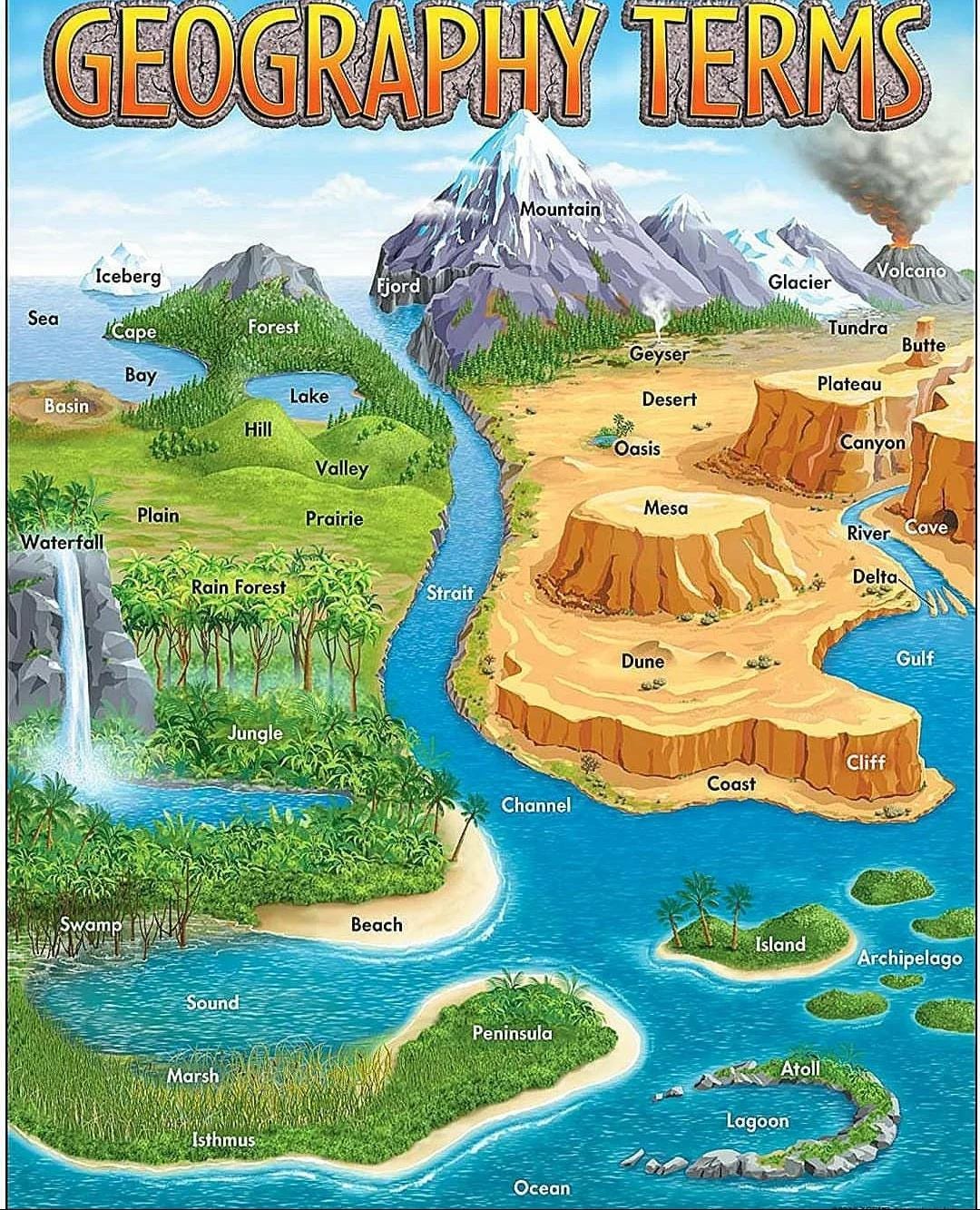
As you peer farther you see wholly different climates stretching out beyond the foothills, brilliant red deserts and soft blue pine forests and sweeping grasslands and fertile swamps. You see mesas and isthmuses and jungles and deltas and cliffs and archipelagos and plateaus and lakes and waterfalls, and everywhere among them villages and cities cultivating what they find in each unique spot.
The City is great, but you are taken with a yen to explore even more. The vastness of the world is so overwhelming, though, that you have no idea where to start.
Your guide has been facing out the opposite side of the observation deck, his spyglass aimed unwaveringly at the mist-shrouded peak of the great Northern mountain. You explain your conundrum to him. Where should you travel?
“Follow me. I’ll show you,” your guide says. “But you’ll have to climb.”
The great Northern mountain is unforgiving. You need special equipment just to get started on your climb; you must learn new techniques with pitons and crampons and ropes. There is some pleasure in this, you suppose, the pleasure of a difficult job well done, but whatever is awaiting you had better be damn good to be worth the effort.
Your guide’s proposed route takes three days, traversing the south face of the mountain to a site he has visited before, where he says all the cleverest people he knows from The City have gone. You buy a heavy jacket and hope he knows what he’s talking about.
The climb is a nightmare. Icy winds try to rip you from the mountainside. Mountain lions stalk you through a craggy pass. Your food, optimized for weight, is barely palatable.
The Outpost emerges out of the icy fog on the third night. It is a small cluster of wood and stone shacks, much smaller even than the village. A crackling fire and a hot strew in the main building are barely enough to thaw out your extremities.
You seem to be the only one suffering, though - everyone else greets your guide like an old friend who has just popped in from the next block over. They compare traversal times, contrast equipment, discuss the finer points of the final ascent.
As you recover and poke around the Outpost, you start to get the sense that there is nothing here in particular that these people actually came here for, not in the way of the oranges in the forest or the sheep in the valley or the ores beneath The City. You suspect they came here solely for the twisted satisfaction of having done something hard for no reason.
You bring this up to your guide on the second night, over more stew, and he looks confused. “No, my friend, that’s not it at all! We settled here because it is the last hospitable resting point before our true goal.”
“What is your true goal?” you ask, already knowing what his response will be.
“Follow me. I’ll show you,” your guide says. “But you’ll have to climb.”
A small chain of mountaineers sets out from the Outpost the next morning, with you and your guide roped together at the end. As before, this climb makes all the others you’ve ever attempted, including the slog to the Outpost, look like rolling out of bed. The mountaineers make you scale sheer cliff faces, cautiously shimmy across deadly crevasses, edge around bluffs where the wind seeks to fling you to your death.
The day’s progress is so taxing that you almost break out laughing when you turn back from the tiny camp of tents your companions have set up and see that the lights of the Outpost are still faintly visible far below you. All that work and you can still see where you started from! What could possibly be worth this?
You ask your guide, and he looks disappointed in you.
“When you were on the beach, you lacked water. What did you have to do to get it?”
“Climb,” you say.
“And in the forest, you lacked food. What did you have to do to get it?”
“Climb,” you say.
“And in the village, you lacked variety. What did you have to do to get it?”
“…climb,” you say, but you think you’re starting to see the error in your guide’s reasoning.
“And in the City, we lack transcendence. So what, pray tell, do you think we’re going to have to do to get it?”
He points up towards the upper reaches of the great Northern mountain, still shrouded in moonlit fog. For a moment, the clouds part and a glimmer of light plays atop the summit, looking almost like the bright lights of the alabaster city so many miles down below you. “There, there! Do you see it?” he says, clouds of steam billowing from his mouth. “The light at the peak! The Promised Metropolis!”
“The… promised metropolis?” you say, starting to wonder if the thin air has gotten to his brain, since to you it pretty clearly looked like Venus.
“Don’t you see?” he says. “Each time we climb, we find a grander and more rewarding place to live. The City is better than the village, the village better than the forest, the forest better than the beach. But why should it stop at the City? That is why we climb from the Outpost, my friend, that is our true goal. The Promised Metropolis at the peak of the mountain must outshine The City just as The City outshines the village.”
“But why should that be?” you ask. “And how? There’s no food up here, no livestock. Aways further up there’s not even any firewood. Why would there be a great metropolis up there?”
“Because all the greatest and cleverest people keep on climbing. It’s the thing to do. Climbing is what leads you to greater and greater places. That’s simply how things work, you have experienced it yourself. So it follows that once we attain the highest peak we will have found the greatest place of all. There’s no need to go anywhere else.”
The clouds cover the summit again, and he turns back to face your dubious expression.
“Follow me. I’ll show you,” your guide says. “But you’ll have to climb.”
You fake spraining your ankle right at the start of the next day’s ascent, and one of the other explorers escorts you back down to the Outpost, where you ‘recover’ and make it back to the city with a different group of mountaineers. You return to the observation deck of the Sky-Scraper and pick a far distant town at random, and enjoy your visit to its dry desert climate, so different from anything you have experienced back home.
You also enjoy the long overland hike back to The City. You’ll say this for the trip to the Outpost - it built your strength enough to travel just about anywhere without breaking a sweat.
When you get home, you once again start trekking down through the village and the forest and the coast once a month to help guide people off the beach.
You never tell any of them about the Outpost. And you never see your guide again.
In “Contra Everyone on Taste” Scott Alexander raises a few questions of this general tenor:
Why do many Michelin-starred meals consist of various inscrutable foams and pastes?
Why is all of contemporary architecture a conversation between different types of hideous buildings nobody wants to live in?
Why is modern art so often a parade of ugly conceptual transgressions?
I’d add, with examples from my particular corners of aesthetic concern…
Why is Sight & Sound’s #1 movie of all time a 200-minute art film about a French hooker doing housework?
Why are the top-rated beers on BeerAdvocate all imperial stouts with double-digit ABVs?
Why is the top-rated roller coaster a ludicrously tall and fast monstrosity in the middle of the Arabian desert?
I’m sure there are other fields of taste where you can think of analogous distortions, where the consensus “best” items in a field are not just very far removed from the most popular items, but also clustered in an idiosyncratic way around some unusual shared quality that makes them unpalatable to many people.
My sense is that these Outposts of odd taste are the result of a distorted heuristic for refinement. We are all born on the beach, enthralled to base sensory pleasures: wine coolers, pixie stix, Lisa Frank, hydrogen jukeboxes. But we eventually realize we need more than this surface level stimulation, and start climbing away from it.
What are we climbing? In a word, inaccessibility. We test ourselves against works that demand successively more effort from their audiences, and see what we can get out of them. And the rewards derived often remain commensurate with the effort expended for quite a ways up the hill of inaccessibility.
This isn’t true for everyone. Social opprobrium can get most people off the beach of literal baby-brain bad taste and over the dunes, but many people stop in the forest, insisting that (McNuggets/McMansions/Marvel movies/Miller Lite/etc.) are all they will ever want or need and refusing to climb further.
Other people will climb high enough to survey the landscape and determine what they actually want to get out of the field they’re exploring. Their objective function happened to coincide with the gradient ascent while they were forming their taste, but now it goes off in its own directions. Navigating to where they want to go may take effort, but the effort is not the point, the satisfaction that can be found at the destination is.
But some people relish nothing more than the gradient ascent. Their objective function never diverges from it. They align their whole selves with it. The harder something is to get into, the more they champion it as the exemplar of good taste, because going for more inaccessible territory always led to better stuff before!
Which means that there lies latent in many fields of endeavor one or more “connoisseurship traps” - places where the monomaniacal inaccessibility gradient ascent of the snob leads them to colonize a poor or unpleasant or just plain weird place in the possibility space simply because it’s hard to drag yourself there, and their heuristic says that that must make it worthwhile, more worthwhile in fact than anywhere else could possibly be.1
Further complicating the navigation of the cultural landscape is the fact that these Mountaineer types are the most likely to play tastemaker and mentor, because they view the job of developing good taste as easy and simple and one-dimensional: you’ll have to climb. Anyone with a more nuanced heuristic would have to do more work to figure out where their interlocutor actually wants to go. But the Mountaineer’s advice is one-size-fits-all.
I say all this as a bit of a snob myself. I’ve browbeaten people to get off of various beaches and climb various hills. And I’ve climbed into some connoisseurship traps in my day. They can be pretty fun to climb into! But I try to be cognizant of the fact that gradient ascent on inaccessibility is not the only way of deciding what’s good and what’s bad - that the same effort that gets you halfway up the mountain can get you halfway around the world instead.
This illogic also applies to people who visit the actual, literal Mount Everest just because it’s tall and hard to get to - it is by any other standard a very poor tourist destination!